Showing posts with label IBPA. Show all posts

Friday, June 19, 2015

IBPA 's "Publishing University" 2015: My Notes on Four Outstanding Talks on Selling Books, Making Books, Metadata, and Video— and a Felicitous Observation


>> READ THIS POST ON THE NEW PLATFORM AT WWW.MADAM-MAYO.COM


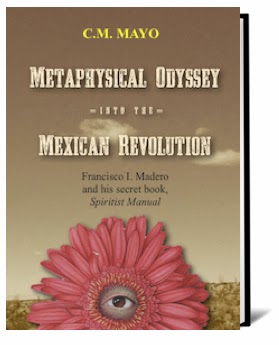
No, as an author I'm not all jumping-jacks about self-publishing publishers can and, on many an occasion, actually do provide important added-value to a book. (My own have been published by Grijalbo-Random House Mondadori, Literal Publishing, Milkweed Editions, Planeta, Unbridled Books, University of Georgia Press, University of Utah Press,  and Whereabouts Press whew, that list is as much a testimony to the diverse genres of my books as to the tumult in the publishing industry.) But as I noted in this previous blog post, the light flashed on for me when I realized, no matter what happens with my future books, because I have self-published several ebook editions and the print-on-demand paperback, Metaphysical Odyssey into the Mexican Revolution, and because digital bookshelf space is marginal cost zero 24/7 (in other words, click, it's in the store, and nothing digital is going out of print anytime soon), for the rest of my natural life, I will always play some role, whether large or minuscule, as my own publisher. And towards that end, I realized, it would behoove me to figure out, or rather, continue trying to figure out what the heck I'm doing. Over the past few years, for my imprint, Dancing Chiva, I've explored my way around a good part of this newfangled digital labyrinth (PODsKindles, iBooks). But of course, there is always more to learn; publishing is a fast-changing game. 

Ergo, I signed up for the Independent Book Publishers Association's 2 day 2015 seminar "Publishing University"It was, in two words, Austinesquely fabulastic.

Herewith may they serve you or someone you know my notes:


1. How Books Sell 
The keynote at lunch was by Peter Hildick-Smith, CEO of Codex Group, on "How Books Sell." I was encouraged to hear that this veteran of the publishing business, who's crunched more than a few truckloads of numbers, believes that "there is a lot of untapped potential in this industry." [My comment: Crowd pleasingly encouraging! I confess, this prompted evil thoughts about Pet Rocks.]

Hildick-Smith said there are three pillars to selling a new book, and you must have all three:

(1) Discovery (Readers are aware of the book) 
(2) Conversion (They decide to buy it)
(3) Availability (It is available to buy when, where and how buyers want it)

On Discovery

+Most people, when thinking about how to sell a book, conflate discovery with conversion. 
+The vast majority of book buyers are not even aware of best-selling authors! 
+Internet promotions (via email, social media, free Kindles, etc) has "generated a lot of low quality discoverability." 
+Analog publicity remains very effective. The quality of discoverability is key. 
+The book needs to get rated. But books must be read before they can be rated. Therefore offering free ebooks as a way to improve discoverability is low quality. 
+ The discoverability source affects 5 star ratings.

On Conversion

+Many times there is a disconnect here. There is no conversion to sales without discovery. "Conversion" is not about liking, it is about acting actually deciding to buy the book.
+Statistics show that the author series brand is the biggest factor. In other words, author brand is key. Ergo, best-sellers are dominated by brand authors. Their fans are 15 x more
Notice that HarperCollins added
"author of Bel Canto"
likely to buy their favorite authors and to give more favorable reviews. "Brand author" = 500,000 fans or more. 
+An author brand is a "rare and valuable asset" but this is not the same as "being famous." Lots of famous and even belovedly famous people publish books that tank. 
+Readers do not always connect the author with the title of the book. In other words, they may love the book but not remember who wrote it. Key: if the author wrote a book with a recognizable title, it makes a difference to add "Author of XYZ," to the cover. 

[My comment: As a reader, yes, it does influence me to learn that the author is also the author of a book I have read and loved, but mainly when I am browsing in a brick-and-mortar bookstore; on a screen, I have to squint to read that line of text. I plucked out this example, of Ann Patchett's Run, see image right. The simple design with large font size for the author name and title works well for viewing on a screen. It also says, "bestselling author of Bel Canto," though that looks like a mushy blur on my iPhone.]


Hildick-Smith then gave a slide show of a study on buyers' reactions to alternative book covers. Oftentimes it was the ineptly designed books that performed better (!!) And it rarely worked to have the author's face on the cover, even when that author is both famous and attractive.

[My comment: my notes become a bit thin at this point. He went into a lot of detail about the elements of cover design.]

On Availability

The speaker ran out of time, alas, before he could delve into this topic, but I don't think many in audience minded because his slide show about book covers was so entertaining and full of practical advice.
[My comment re availability: yep, it drives me bananas when I visit an author's website, decide to buy the book, but then cannot find a link to buy.] 

Sum up: 

+Be bold, stand out; 
+books are an extreme niche business; publish for the untapped 85 million buyers; +recommendations can take 6 months to deliver; 
+brand authors are a massive sales factor; 
+it's not one size fits all; 
+a book's message is a mini-story that must connect; 
+brick-and-mortar bookstores remain the the largest discovery source, not amazon.com; +to sell books, you must have discoverability and convertibility and availability.

2. The Art of Making Books

Tim Hewitt, sales rep for Friesens, gave an excellent and fascinating talk about the elements of a traditionally printed book. 

I didn't take elaborate notes on this one, but I was delighted that he could answer my question, Why is the POD (print-on-demand) paperback so much heavier than an offset-printed similar sized book? I have two editions of my book in Spanish, one printed in the U.S. as a POD under my own imprint, Dancing Chiva, the other offset printed (traditionally printed) in Mexico by Literal Publishing. The editions are the same design and size (only a couple of centimeters of difference), but the Literal Publishing edition is both nicer and substantially lighter weight. 

Hewitt's answer was that the machinery for PODs requires heavier paper, but with offset printing, you can go with lighter weight but still thick paper, which saves money on paper and shipping, and also maintains spine width. 


[My comment: It occurred to me at this point that if one has a large enough review copy campaign, because of savings on both shipping and postage, it could make sense to print the review copies traditionally, even if the bulk of sales are expected to be POD via amazon and other online booksellers. Well, of course, that's a question of plugging in the numbers at the time.] 


Hewitt emphasized that, before deciding on your paper, it is key to understand, who is your target audience / the end user of your book? 


[My comment: For my latest book, Metaphysical Odyssey into the Mexican Revolution and the Spanish translation Odisea metafisica hacia la Revolución Mexicana, the answer is, primarily students, Mexicophiles, and scholars. That means a good-looking but affordable and easy-to-find paperback edition available on amazon (and on various other booksellers sourced from Ingram). However, in Mexico, where fewer book buyers buy online, this means a traditionally published paperback available in major urban bookstores, hence the Literal Publishing edition. (A hardcover edition for libraries? I'm working on it. Yes, the Kindle edition is already out.)] 


Hewitt also fielded several questions from members of the audience who were concerned about environmental impact of the printing industry. The Friesen's website has a page dedicated to that very subject, with some surprising information.


[My comment: It's a mistake to assume digital editions have zero environmental impact. It's also a mistake to assume digital means immortal; in fact, digital files degrade much faster than acid-free paper. I've already had some files and software from the late 90s turn into garbage. Sometimes, dagnabbit, paper is superior.]


3. Book Metadata from Head to Toe
Laura Dawson of Bowker, the ISBN agency, gave this super chewy talk about ISBNs, Library of Congress numbers, BISAC categories, and best practices.

I googled around and found Dawson's chapter, "What We Talk About When We Talk About Metadata," from High McGuire and Brian O'Leary's Book: A Futurist's Manifesto (O'Reilly), which is better than my notes.


> Book: A Futurist's Manifesto on amazon


4. The Power of Video 
Tanya Hall, CEO of Greenleaf Book Group, gave this riveting talk— it was at the tail-end of this cram-packed conference, so that's saying a lot. 

+ Why video? Discoverability. Video is 52 times more likely to show up on Google search than text results. 


+Video gives a personal connection, humans are drawn to other humans, used right it can increase the trust factor, use it to set tone at events. 

+It's memorable.

Some types of video you might produce: animation, behind-the-scenes., book trailer, expert trailer, a reading, talking heads, daily tip, tutorial


Tips [My comment: I didn't get all of them, I was flagging.]:


+ Subject should face light to avoid being backlit

+ Add your logo to your videos (a watermark or what's called a "bug")

+ Consider a personal message and/or opening

+ Use music to set tone / build emotion

+ Transcribe video content to increase searchability 
[my comment: Jane Friedman convinced me to do transcriptions of my podcasts for this same reason. Transcription, however, is extremely time-consuming and tedious work. If you can afford it, I would recommend hiring someone to do it; nonetheless, you'll still have to go through it yourself and make corrections. Yes, I know about speech recognition software. I tried it out and there was so much gibberish in there, it turned out to be faster, easier, and far more reliable to get it done by a human being. Yes, that may change.] 

+ Commit to a regular schedule 
[My comment: sounds optimal but not necessarily doable... I'd rather be writing...I've committed to regular schedule with this blog, but that's my limit.]

+ Put your video on your website, a video landing page can increase conversion by up to 80 percent. 

+ Participate in the community, comment on other videos on YouTube 
[My comment: sounds optimal but...I'm out of breath just thinking about it...]

+ Upload your video to amazon and goodreads 
[My comment: Yes, that goes on my "to do" list...]

+ Keep it short, 60 seconds if possible 

++++++++++++++++++++++++++++++++++++++++++++++++


[My general comment on video: I get that it's a powerful medium and I've already invested time in learning how to make brief, edited videos using iMovie. For example, here is my trailer for my novel in Spanish, El último príncipe el Imperio Mexicano:


And here is my minute-and-a-half video about a rock art site, apropos of my book in-progress on Far West Texas:


My current enthusiasm is for making 1- 2 minute edited videos that can work like a step-up from a GIF to illustrate an article / book / blog post although I realize that these don't necessarily help sell books or "go viral," as would, say, a baby moose frolicking in a lawn sprinkler. I do have a couple of longer videos about my latest book on my "to do" list a trailer and a talk about some of the rare esoteric books I consulted, which I'll get to... oh, lala, one of these days-- and maybe sooner rather than later. 

The thing is, making videos is a very different endeavor than writing, and it eats up time for writing. Delegate the video-making to a service or a freelancer? Ouch, that's a bit of a pricey proposition, and frankly, I've been underwhelmed by most of the ones I've seen. (Translation: I'd really rather make my own.)

More importantly, I doubt my readers, current or potential, are those who spend their free hours surfing around on YouTube. 

Do I sound a bit down on video? I do relish learning about the ever-expanding menu of options for marketing books, what others are doing and have found valuable for them. But  book marketing is a bottomless abyss of more, more, always something more one can do. After listening to all the ideas and experiences and whatever data there might be about this or that, one simply has to refocus on one's intentions and priorities, decide what to do and what not to do, and move on.]


5. And a felicitous observation on the emergence of so many new "hybrid" or "independent" publishers

Greenleaf Book Group is one of several new so-called "hybrid" publishers at the seminar, and I am happy to see them because it seemed to me that there was a yawning gap that needed to be filled. On the one hand, there are traditional publishers and on the other, various vanity presses, from CreateSpace to Lulu and all the rest of those that publish anyone and everyone and their uncle's chinchilla's macaroni recipes. 

What is needed, and so I see from this "Publishing University" seminar is beginning to emerge, is a viable business model that offers not only professional quality editing, design, and marketing, but some curation. So yes, the author does shell out the clams, but his book won't end up swept up with the roaring river of riffraff.

(Put another way: every book is a needle in a haystack, but the smaller the haystack and the nicer the hay, the easier it will be to find it.)

Of course it would be lovely if the author didn't have to pay for anything, and instead received Niagaras of royalties and kowtows from all major bookstores, Oprah, and newspapers of national and international circulation. But the fact is, many books are worthy of readers but, for various reasons, cannot be expected to cover their costs if traditionally published. (University presses take on scholarly and some literary works, but their budgets are increasingly constrained. Oftentimes, to publish a given book they require "underwriting," as they so delicately call the clams, from the author's employer or a foundation.) 

Related to this is the emergence of more accessible a la carte services, including book design, cover design, cataloging and metadata consulting, editing, copyediting, ebook file testing and quality assurance, indexing, and of course, ye olde book marketing. For example, Firebrand TechnologiesTLC Graphics, and Philadelphia-based Parlew Associates are now on my radar.


Another of these "hybrid" or "independent" publishers is poet and novelist Michele Orwin's Bacon Press Books, which has a carefully curated catalog. The latest from Bacon Press Books is the paperback edition of Kate Blackwell's  brilliant collection of short stories, You Won't Remember This, which was originally published in hardcover by the now sadly defunct Southern Methodist University Press. (Buy your football tickets here.)

> Read my Q & A with Michele Orwin here.

> Read Bacon Press Books Q & A with Yours Truly here.


There were more panels I attended, all excellent, and, lacking a robotic avatar, many more I couldn't attend. 

Another benefit was the chance to talk with the various vendors, among them, graphic designers, freelance publicists, editors, and many printers, as well as old friends and workshop students. In addition to Michele Orwin, there were several people from She Writes, including Barbara Stark-Nemon, who took my fiction workshop at the San Miguel Writers Conference, and whose historical novel Even in Darkness is just out; and Denise Camacho, President of Intrigue Publishing. Literary, scholarly, cookbooks, Christian, mystery, history, diet advice, bear attack memoir, marketing how-to participants were publishing an astounding variety of books.

In sum, if you're at all interested in learning about the nuts and bolts of publishing, whether as a small publisher or as a self-publisher, the IBPA's Publishing University is an all-star 2 day conference. Next year, 2016, it will be held in Salt Lake City, Utah. 

> Your comments are always welcome. One of these days I'll get my next newsletter out. You are welcome to sign up for that here.


Wednesday, April 15, 2015

Q & A with Independent Publisher Michele Orwin, Founding Editor of Bacon Press Books

A new independent publisher
As some of you may know, I wear another chapeau as editor / publisher of Dancing Chiva (which specializes in publishing works by Yours Truly and, shall we say, denizens of the Afterlife). In that guise, I attended last weekend's excellent two day seminar in Austin, Texas, "Publishing U," the annual conference of the Independent Book Publishers Association, where I ran into my Washington DC writing friend, novelist and poet Michele Orwin. Turns out she's started up Bacon Press Books

Check out the Bacon Press Books's beautiful website and the latest book, the first paperback edition of Kate Blackwell's superb short story collection, You Won't Remember This, which was originally published in hardcoverand to glowing reviews by Southern Methodist University Press.

>> CONTINUE READING THIS POST AT WWW.MADAM-MAYO.COM

Herewith some Q & A:

C.M. MAYO: What prompted you to start the press?

MICHELE ORWIN: I knew if I wanted to keep working, I’d have to have my own business. Since I’d spent my whole professional life working as a writer and teaching others about writing, I wanted to do something where I could use my experience. Then I read about digital publishing. It made so much sense. 

We know so many writers who had published books that are only available in hardcover. I thought once I learned how to publish, I could either release their books in paperback and Ebook or else teach them how to do it. 

The first paperback edition
of Kate Black's splendid book of short fiction
Bacon Press Books, 2015
C.M. MAYO: I for one am delighted to see what I would call a "hybrid press." (Would you agree with that term?) It seems authors such as myselfpreviously published with various small and commercial presses, a track record of reviews have been caught between, shall we say, less than attractive deals, or self-publishing, with zip in between. Self-publishing has usually meant that one's book gets lost in the amazon.com haystack, next to Suzy's Memories of Cupcake Recipes, which is set in some horrible font with a blecch cover. (Though now that I think about it, Suzy's Memories of Cupcake Recipes could be the title for a delicious comic novel...)

MICHELE ORWIN: There’s been a lot of discussion in the indie community about terms. I’ll be very happy when we all finally come up with ones we can use. People still confuse what used to be called "vanity publishing" with "self-publishing."  Vanity publishing in the past meant all you had to do was pay a (usually) exorbitant fee and you’d get a book. No vetting and not great editing. Self-publishers today are a lot more sophisticated and they have access to a wide range of talented free-lancers, so the quality of self-publishing can be pretty high. 

Plus there are a lot of what’s now called "hybrid authors." Authors who publish both with traditional publishers and with independents or else self-publish. For some it’s a question of economics, they can make more money publishing on their own. For others, it’s a matter of control. We have one author who was published traditionally but wanted to go in a different direction from what his publisher wanted, so he chose to work with us. 

I call myself an independent publisher. We don’t take on most of the books we’re sent. We have high editorial and production standards. People can’t pay us to publish bad books or even mediocre ones.  Not sure what we’d do with Suzy's Memories of Cupcake Recipes. 

I call the business model I use "partnership publishing." That comes closest. We've tried to make it as author friendly as possible and still be in business. While we can’t offer advances, and we do ask authors to cover production costs, we share other expenses. And while they may provide the capital, I put in way more time than our authors do once the book is published. We offer a generous split on revenues, a two-year contract so authors can go elsewhere if they get a better offer or aren’t happy, and the author keeps all rights and all files. 

C.M. MAYO: You've been around a long time and seen many other small presses. Not to name names, but what are some of the things that you've seen as common practice in the small press world that you think would be best to avoid?

MICHELE ORWIN: Not sure I can answer that. We published our first book in January 2013 and we’re still learning. What I have seen is that the indie community is incredibly generous in helping newcomers. Giving out information, sharing  contacts. I’ve learned so much from conferences, online groups, and other small presses.  The really awful things are done mostly by the larger companies that charge authors a fortune and don’t do much more than produce a book and make the author buy hundreds of copies. 

C.M. MAYO: What are some of the common misconceptions first time authors have that make it difficult for their press?

MICHELE ORWIN: There are five misconceptions that I’ve run into and have heard other publishers talk about too. First, that the book is fine as is and doesn’t need an editor. Second, just because a book is good, it’ll be a best seller or maybe even sell at all. Third, that they don’t have to do any marketing or promotion to help their books get discovered. Fourth, that they’ll make money. Fifth, that it’ll happen quickly. 

With more than 600,000 books expected to be published this year, it’s a very tough business. 

C.M. MAYO: Your website is one of the best I've ever seen. Tell, tell!

MICHELE ORWIN: Thank you! I tried about half a dozen different providers. But I’m not very adept and they just didn’t come out right. My daughter knows coding, she told me about SquareSpace. I needed something easy to use that would look good and SquareSpace was it. 

C.M. MAYO: How about book stores? Does Bacon Books Press work with sales reps?

MICHELE ORWIN: Not all the books we publish would do well in book stores. But for the few that would, we haven’t had much luck. The books can all be special ordered or ordered online from the stores. From what I’ve heard, that’s how many stores would prefer to deal with most small presses. 

We’re not working with distributors yet. But at some point we will be when it makes economic sense for us to do it. A big part of this new publishing landscape is having access to a global market by making the books available online. That’s where we’ll find most of our readers. 

C.M. MAYO: Can you talk about your background as a writer and poet and how that informs what you're doing now?

MICHELE ORWIN: I’m a fiction writer, my husband is a poet. It’s been a real eye-opener for both of us. Though probably more for me. I now understand why agents/publishers don’t want to see a whole book, or won’t read past the first 10-20 pages. You really can tell pretty quickly if you’re going to like something. I understand how subjective it all is. One book I turned down now has 25 5-star reader reviews on Amazon. It just wasn’t right for us, but I’m sure the author is wondering why I passed.

And I understand why it’s not a good idea to give too much feedback if you’re going to reject a book. Just because I see flaws doesn’t mean someone else will. It’s better to let the author try elsewhere. 

I also understand better why authors need to be involved in marketing. I used to cringe at the idea of self-promotion. But now I can see that the author really is the best person to connect with readers. 

Thursday, January 22, 2015

Austin, Ho! Publishing University


As a writer with several books traditionally published, and one aiming to place the next with a commercial or university press, what in thundernation am I doing signing up for the Independent Book Publishers Association's two day annual Publishing University


Pug-assisted. In a future blog post 
Uli and Washi will demonstrate
the number 1 book marketing
principle. 
Well, inspired by the likes of Kenneth Ackerman, Sophy Burnham, and Sandra Gulland, I have become what is called a "hybrid author," that is, an author who has some books with traditional publishers (in my case, University of Georgia Press, Milkweed Editions, Unbridled Books, Random-House Mondadori, etc) but others going out under one's own imprint (mine being Dancing Chiva). 

In particular, like many authors, these past few years I've been busy bringing out the electronic editions of some of my older works, published back in the days of yore when publishers didn't care about digital rights (what did they know, ha.  And yes, Miraculous Air in Kindle is selling like gorditas.) And more recently (for various reasons detailed in this talk for the American Literary Translator's Association), my own Dancing Chiva brought out both the Kindle and paperback editions of Metaphysical Odyssey into the Mexican Revolution: Francisco I. Madero and His Secret Book, Spiritist Manual.


Bright, charming and talented in multitudinous ways,
 my assistants do not do website updates.
Here they are asking, "You want us to do whut?

That said, I'd love to place my next books with a publisher who can do more for them than
I can with my own itsy-bitsy pug-assisted operation, and that may happen with the next novel and the work-in-progress on Far West Texas... we shall see. But the thing is, for the rest of my life, a long one I hope, many of my many books' editions may remain in my purview. So, I figure, I'd better grok this game.

I've learned a lot-- 2014 was my year of scrambling up the POD learning curve-- but undoubtedly I have more to learn, and since things are changing faster than a rocket to Mars, I guess it's just going to be (...sigh...) an ongoing process. But hey, I get to visit Planet Austin! Can't complain about that. 

Dear reader, if you are going to Publishing University, zap me an email or tweet @cmmayo1 or @dancingchiva. It would be grand to meet you in person there.

> Your COMMENTS are always welcome.


Wednesday, September 10, 2014

It's Not Like Making a Peanut-Butter-and-Jelly Sandwich But It's Not Rocket Science, Either, or: How I Did My POD (And You Can, Too)

Just in the past month I've had so many of my writer friends and historians ask me how I made my print-on-demand (POD) paperback books,


and the superb Spanish translation by Mexican poet and novelist Agustín Cadena, USA edition,

Francisco I. Madero y su libro secreto, Manual espírita
-- the latter goes live in just a couple of days--

and knowing that many of you, dear readers, are writers, many with the same concerns about publishing, I post my answer herewith.

Now, I don't pretend to be the expert. That said, it's important to keep in mind that major innovations in digital publishing and also in book distribution and fulfillment are so recent, and a-morphing by the moment, that even the experts-- those who've set up web pages and offer to consult or even undertake to do it for you-- may not know that much more than what you can figure out for yourself. Or they may. Caveat emptor. And just try to keep your seatbelt on and your eyes uncrossed.


(I won't get into the pros and cons of self-publishing vs. traditional publishing, whether with a commercial, small or university press; that's another blog post for another time-- and on that subject, see some of the links for further reading below. I am what is now termed a "hybrid author," one with books published by traditional presses-- in my case, University of Georgia Press, University of Utah Press, Milkweed Editions, Planeta and Random House-Mondadori, among others-- and one or more books self-published.)


Screenshot alert! Yes, you can buy my
book from Politics & Prose in Washington DC
--and about a zillion other bookstores'
websites. Yay!
WHY POD (PRINT-ON-DEMAND)? (OR DID YOU HAVE ROOM IN YOUR BASEMENT FOR AN ELEPHANT IN A COMA?)
Certainly, you could self-publish your book the old-fashioned way, that is, with offset printing, in which case you would call and email around to printers and get a few estimates… which is a little bamboozling, but Dan Poynter's excellent book explains all about that. If you go this route, probably, if your printer is a good one, the book will turn out looking nicer than a POD and you'll also be allowed a far wider selection of papers, sizing and bindings. 

But with offset printing, the problem is, well, then what will you do with all the books? 

Because with offset printing, the per unit cost of a book is a function of the print run-- and any size print run has to cover the cost of just getting the machines up and running and fed with your specially ordered sheets of paper-- so, to make it worthwhile, you'll probably want to do a print run of at least 1,000-2,000 books. 

Shipping all those books will cost you more than a chunk of change, and all those boxes of books, like an elephant in a coma, will swallow up a heap of space in your basement (unless you want to help your chiropractor buy his weekend house, don't even try to lift them up to the attic). 

And then, how did you plan to distribute the books and fulfill orders? Assuming you have all the time in your life and the iron-clad personality to play salesman. Uyy.


If you go POD, while the per unit cost of printing the book is probably going to be substantially higher, the quality not as good (but pretty good; most readers won't notice the difference), it will be far less expensive for you upfront because you can print only, say, one copy. Or twenty-five. Or 57. Or whatever number you want at the moment, and shipped to wherever you please. Nor will you have to worry about storing them, nor worry about distribution and fulfillment-- if, that is, you use a POD printer that also offers distribution and fullfilment such as amazon.com's CreateSpace

Plus, since POD is digital, you can easily make corrections. As anyone who has published a book knows, no matter how many times and how many people proofread it, there will be typos. And sometimes, toe-curlingly embarrassing ones. (I'll admit to having updated my PDF several times already, and my book hasn't even been out a year…)


There are many other POD printers, but as of this writing-- September 2014-- hands down, amazon's CreateSpace is your best option. There are several factors to consider, such as cost, customer service, quality, color options, and you can compare and contrast with other POD printers and sellers on a spread sheet… (as did Neal Guillen in his excellent presentation for last years' "Publish Now!" seminar at the Writer's Center), but I am confident you'll come to the same conclusion I did that, all in all, as of 2014, CreateSpace wins.


AS OF 2014

I repeat, "as of 2014." Everything is changing so fast; I have no idea what this landscape will look like it 2015, never mind 2020. (Maybe there will be some kind of quantum nanobot printing, so we can dream our book and wake up to find it waiting for us there by our plate of eggs and bacon. Or, maybe Jeff Bezos will have been beamed up to one of the moons of Jupiter, and we'll all be trying to figure out how to oil a letterpress.)


WHY CREATESPACE?

Key thing to know: CreateSpace is owned by amazon.com. Once you've uploaded your book, at the click of a button, you can list it for sale on both the CreateSpace.com store and amazon.com-- right alongside, say, J. K. Rowling's Harry Potter, or whatever might be best-seller du jour. If someone buys it, whether in the Create Space store or on amazon.com, amazon will print it and amazon will collect the money from the customer, ship it to the buyer, and then deposit your share of the proceeds (which, by the way, is a far better percentage than the typical royalties you would get from a publisher) directly into your bank account. Oh, and you can buy copies of your own book at a discount better than most traditional publishers offer their authors.

Is that easy, or what? So why waste your time? 

> START HERE.


WAIT! DON'T I HAVE TO HAVE AN ISBN? 

(HOW DO I GET ONE?)

Yes, you do need an ISBN, your book's identifier. You have two choices: get it from CreateSpace, in which case your book will appear with the CreateSpace imprint, or get it yourself from Bowker, in which case it will show your own imprint (mine is Dancing Chiva). If you go the latter route, you will also need to buy a bar code (pictured left), also from Bowker. Just keep your credit card handy and follow the instructions on their website.


AND THEN HOW DO I PREPARE MY BOOK TO UPLOAD IT TO CREATESPACE?

Once you've visited that how-page on CreateSpace, you will see that you have the option of delivering a formatted PDF of a file made in Adobe InDesign or paying them a few hundred dollars (very reasonable for this work, by the way) to do that for you.

I went and did something a little bit complicated: I rented the Adobe In-Design software, confident that I could format my book myself, since I had been able to format my magazine and chapbooks in ye olde now defunct Adobe PageMaker. I was much too optimistic, alas; Adobe In-Design is a bit like riding a unicycle for a couple of miles. It can be done! But it's not like making a peanut butter-and-jelly sandwich! 


Screenshot of the opening of my book's first chapter in Adobe InDesign.
If you zoom in closer on that dashboard, you might get really scared.
It does look a little Apollo 13-y.


So I hired a graphic designer, a very good one named Rose Q., whom I found on www.elance.com. (Is that a typical experience on www.elance.com or was I lucky? I suspect the latter but I do not have enough experience to say.) I already knew precisely how I wanted the book to look (more about book design here), so she basically followed my instructions, formatted it in Adobe InDesign, and sent me the Adobe InDesign file and a PDF, and then I went to CreateSpace and uploaded the PDF. All in all, I was very happy with this path. I can say what CreateSpace charges for book formatting is more than fair (I suspect they outsource to India), though how the quality of the formatting is I do not know. (But I still wanted to learn how to use Adobe InDesign myself, so for another two books, not discussed here, I hired a tutor from www.wyzant.com with whom I work via Skype. Am I from Palo Alto, or what.)

(WHOA. I'M ON THE SHADY SIDE OF 50. 
WHAT DO YOU MEAN, YOU "UPLOADED" THE PDF?)
I logged into CreateSpace, and when they prompted me to select a file to open, I clicked "browse," and a little window opened up wherein I could scroll down to find, in my own computer, the .PDF file. I clicked on that. Then I clicked on the button that said "upload." Peanut butter-and-jelly sandwich. 

AND THEN HOW DO I MAKE THE COVER?

You can use a template provided by CreateSpace, though in my opinion those look a little well, Createspace-esque. You could also hire a professional graphic designer, which will cost you a chunk of change. I designed mine myself, incorporating a painting by Kelley Vandiver (with his kind permission), my own photo taken with my iPhone of Casa Piedra Road (that's actually in Texas, don't tell anybody), some fonts I purchased from the Walden Font Co., and then I had my elance.com designer do it for me in Adobe InDesign and make the PDF. And I uploaded that. Ta da.

>You can see what my book looks like on the CreateSpace store and on amazon.com. Why not order a copy and then you can really see what it looks like!


HOW CAN I GET MY POD BOOK INTO BRICK-AND-MORTAR BOOKSTORES AND LIBRARIES?


This is a two-step process. One is easy, the other is a head-banger. Quantities of Kleenex, your choice.


STEP #1 

Make your book available via a major distributor such as Ingram. 
The reason is that there are so many books and so many different publishers out there that it would be a total migraine for librarians and booksellers to have to place so many different orders with different sellers. Instead, it's, wham, Ingram, done.


If you go the route of CreateSpace, getting your book onto Ingram is just a question of clicking, "yes" on the sign up page for "Expanded Distribution." (No worries, you will see that when you get there.)

I do not know if my choice was a good one or not (time will tell), but since I wanted to use my own imprint (my own ISBN), not CreateSpace's, CreateSpace did not offer both options. So while CreateSpace does my POD for CreateSpace and amazon, to get onto Ingram I went to Ingram Spark. So Ingram distributes it (which just means they make it available to their customers) and when a bookstore or library orders it, Ingram will print it and ship it to them.


Right, my book, same ISBN, is available on amazon / Createspace and Ingram. No problem. And because it is on Ingram it automatically gets listed on major on-line bookstores such as Barnes & Noble and Powell's and a whole bunch of others.

You probably won't find this on the shelf
in any B & N, but you can order it 

on-line from them, yay!

I found Ingram Spark a little frustrating to work with because their customer service, though consistently helpful and kind, was not always available by phone, and by email, they often took as long as 24 hours to answer. CreateSpace, on the other hand, had a telephone number I could call at any time and an actual live human being answered quickly, and then actually answered my questions. (Yea, verily, miracles still happen on Planet Earth.) Also, unlike amazon, Ingram Spark charges a small fee for "market access." But in all, the advantage for me of using Ingram is that now I can market my book to libraries under my own imprint, Dancing Chiva. 


As for brick-and-mortar bookstores, I don't see them being very important for a self-published book on a niche subject such as a mine. 
(Yours, of course, may be a different case, and you might be willing, as I am not, to visit bookstores and try to sell to them directly.) I am assuming that the majority of my sales will be of Kindles and POD paperbacks via amazon. Yep, it is sad (I play a wee violin): most brick-and-mortar bookstores have already gone the way of the brontosaurus. 

Furthermore, my understanding is that most bookstores insist on being able to order whatever quantity they want and then return any unsold books-- at the publishers' or author's expense. When you set up your account on Ingram Spark, you can click that option, allow returns, if you so desire. But know that bookstores are notorious for ordering boxes of books and then returning them-- sometimes without even having brought them out of the back room. Oh well, you could click the option "destroy" the unsold books, however many those might be, if you don't want to pay the cost, whatever that might be, of their return freight. As for me, sorry, if you order my books, they're yours.


Screenshot alert!
My book, Metaphysical Odyssey into the Mexican Revolution
is also carried by the famous Powell's on-line bookstore, double yay!


STEP #2. 
I'd never even heard of this store,
but yay, they're offering my POD!
(If you order it, they source it from Ingram.)
You have to market your book. (Grrr. Advil. $$$. Guilt Management 101)
Just because it's for sale on amazon.com doesn't mean any one will notice it, never mind review it, and just because it's distributed by Ingram, huge step as that may be, doesn't mean, abracadabra, it will sell. 

Marketing a book is a whole different blog post and anyway, I am not the expert, and I am mainly focussed on writing my next book because… that's what I do! 

My own rather lazy-daisy, low-key strategy with Metaphysical Odyssey into the Mexican Revolution has been to give autographed copies to selected individuals (if you teach Mexican history, don't be shy, ask me for a review copy here), blog, guest-blog, do a bit of social media, attend and speak at relevant conferences and wherever they'll have me (thank you, American Literary Translators Association, Rice University, and the UCSD US-Mexico Center, and the major book fair about to make an announcement today Texas Book Festival), give interviews (as for example, here and here and here), and do a postcard campaign to U.S. libraries. 


For postcard campaigns, I can recommend www.modernpostcard.com and renting the mailing lists of libraries available on www.newpages.com. For the latter, hat tip to my fellow Women Writing the West member and very successful self-published author, Susan Wittig Albert, who so generously shares her tips for getting a self-published book into libraries.

For reviews, I might also try Netgalley.com later this fall-- though I haven't really gotten my mind around that yet. My understanding is that it's a good way to reach bloggers, teachers, and librarians. (Yes, it costs a few hundred dollars, but it's cheaper than sending that many paperbacks through the mail.)

> Join the Independent Book Publisher's Association for advice, webinars, more resources and discounts-- the discounts alone just about cover the cost of membership. (That's where I got the story straight about CreateSpace and Ingram and first heard about Netgalley.)


IN MODEST BUT DELIGHTED CONCLUSION

As they say, aim for the stars and you won't blast off your toes. I did aim for the stars with my book, I put my heart into it, and I believe it is a paradigm-changing work on the Mexican Revolution, on Francisco I. Madero, and the history of Spiritism. That said, I take my own advice: As a self-published author, in a world where the big publishers still have the money and muscle, it's best for your Kleenex supply to keep your expectations modest.  


(That said: Dear Oprah Winfrey, If you invite me on your show, I promise to be nice. And you might be interested to know that in my book, Metaphysical Odyssey into the Mexican Revolution: Francisco I. Madero and His Secret Book, Spiritist Manual-- fair use-- I quote from your interview with Wayne Dwyer about his "psychic surgery.")

P.S. New York Times best-selling author and also, on occasion, self-published author, marketing guru Seth Godin, offers his perennial words of wisdom for authors > here. < After having published nearly a dozen works over the past 20+ years with publishers both big and small, Yours Truly vouches for Mr. Godin's profound wisdom on this subject and, by the by, sends him a cyber shower of jpeg lotus petals. 


In conclusion, yes, it takes a little work, a little money, and a trudge up the learning curve to make it happen, but the advantage of doing a POD on CreateSpace / amazon / Ingram is that, rain or shine, night or day, and around the world, 


YOUR PAPERBACK BOOK
IS NOW AVAILABLE FOR SALE ON-LINE 
FROM MULTIPLE MAJOR BOOKSELLERS, 
AND NOT, AS IN THE DAYS OF BRICK-AND-MORTAR YORE,
 FOR THE SAME DURATION AS A TUB OF COTTAGE CHEESE, 
BUT, AS YOU PLEASE, 
INDEFINITELY. 

Anyone with a credit card can easily order your book and receive it as quickly as any other book, and if and when they do, you will be paid a very generous royalty by direct deposit in a timely manner. That simple fact is a TOTAL LET'S-DRINK-TANG-ON-THE-MOON GAME-CHANGER. 

FURTHER READING


UPDATE 2015. Publishing guru Jane Friedman has a free and very helpful graphic, Book Publishing Path. Highly recommended.


> APE: Author, Publisher, Entrepreneur
Highly recommended how-to book. One excellent tip offered by the authors, Guy Kawasaki and Shawn Welch: stick with 6" x 9" for the size.  

=====>>> Your COMMENTS always welcome. And I also welcome you to sign up for my newsletter.

+ + + + + + + + 

MORE MADAM MAYO:


+Traditional + Indie = Hybrid Publishing: Three Authors Dish at Jane Friedman's Blog
(Highly recommended)

+Self-Publishing for All the Right Reasons (Reporting on the Writer's Center's "Publish Now!" Seminar)

+How I Published My Kindles

+Seven Reasons Why E-books Will Be Big in Mexico

AND OVER ON THE HOME PAGE, www.cmmayo.com

+Metaphysical Odyssey into the Mexican Revolution
Excerpts, podcasts, resources for researchers and more, and you betcha, it is available on Kindle, too.

+The Manuscript is Ready-- (Or Is It?)-- What Now? 
(From the "Publish Now!" Seminar at the Writer's Center)

New Events: My Literary Travel Writing Workshop 
one day only, Saturday, October 11, 2014 at the Writer's Center.


***UPDATE: >>Listen in<< anytime to the podcast of my talk about this book for the University of California San Diego's Center for U.S.-Mexican Studies.