Continue reading this post on the new platform, www.madam-mayo.com

Showing posts with label Q & A. Show all posts
Showing posts with label Q & A. Show all posts
Sunday, December 27, 2020
Sunday, November 22, 2020
Q & A with Poet Matthew Pennock on "The Miracle Machine"
>> Continue reading this post on the new platform at www.madam-mayo.com


Monday, June 22, 2020
Q & A: Ginger Eager on Her Debut Novel "The Nature of Remains"
>>Read this post on the new platform www.madam-mayo.com
Monday, May 25, 2020
Q & A: Art Taylor on “The Boy Detective & The Summer of 74 and Other Tales of Suspense”
>>READ THIS POST ON THE NEW PLATFORM WWW.MADAM-MAYO.COM
Monday, April 27, 2020
Q & A with Ellen Prentiss Campbell on Writing Fiction and Her Latest Collection "Known By Heart"
>> READ THIS POST ON THE NEW PLATFORM AT WWW.MADAM-MAYO.COM
Monday, March 23, 2020
Q & A with Joanna Hershon on Her New Novel St. Ivo
>> READ THIS POST ON THE NEW PLATFORM WWW.MADAM-MAYO.COM
Monday, January 27, 2020
From the Archives: Q & A with Roger Greenwald, Poet and Literary Translator of Gunnar Harding
>> READ THIS POST ON THE NEW PLATFORM WWW.MADAM-MAYO.COM
Monday, December 23, 2019
Q & A with Poet Barbara Crooker on the Magic of VCCA, Reading, and Her Poetry
>>READ THIS POST ON THE NEW PLATFORM AT WWW.MADAM-MAYO.COM
Monday, November 25, 2019
Q & A: Bruce Berger on "A Desert Harvest"
By C.M. Mayo www.cmmayo.com
This blog posts on Mondays. As of 2019 the fourth Monday of the month is devoted to a Q & A with a fellow writer.
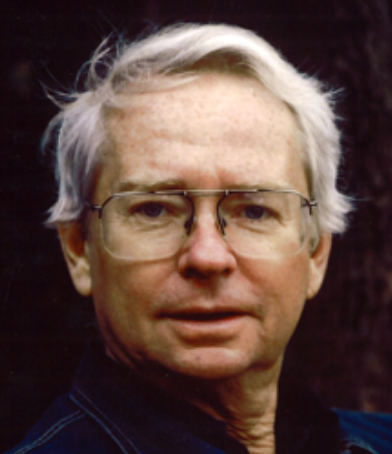
Very late in the game, albeit well more than a decade ago, I learned of Bruce Berger’s work when I happened upon Almost an Island: Travels in Baja California in a California bookshop.. >> READ THIS POST ON THE NEW PLATFORM AT WWW.MADAM-MAYO.COM
Monday, October 28, 2019
Q & A: Sergio Troncoso, Author of “A Peculiar Kind of Immigrant’s Son” on Reading as If Your Life Depended on It, Emily Dickenson, the Digital Revolution, and the Texas Institute of Letters
By C.M. Mayo www.cmmayo.com
This blog posts on Mondays. This year the fourth Monday of the month is devoted to a Q & A with a fellow writer.

Monday, September 23, 2019
Q & A: Clifford Garstang Author of “The Shaman of Turtle Valley”
By C.M. Mayo www.cmmayo.com
This blog posts on Mondays. This year the fourth Monday of the month is devoted to a Q & A with a fellow writer.
>> READ THIS POST AT WWW.MADAM-MAYO.COM
Monday, August 26, 2019
August From the Archives: Q & A with Shelley Armitage on “Walking the Llano”
By C.M. Mayo www.cmmayo.com
August 2019 finds me on vacation. Nonetheless, each Monday this month I will be offering posts from the archive (as usual, look for a workshop post on the second Monday, Q & A with a fellow writer on the fourth Monday).
Q & A WITH SHELLEY ARMITAGE
ON WALKING THE LLANO
ON WALKING THE LLANO
Originally posted on Madam Mayo blog August 21, 2016
The week before last, I posted a brief but glowing note about Shelley Armitage’s Walking the Llano: A Texas Memoir of Place. This week I am delighted to share with you the author’s answers to my questions about her lyrical and illuminating memoir of growing up in and later returning to explore the area around Vega, Texas.
>> CLICK HERE TO CONTINUE READING THIS POST AT WWW.MADAM-MAYO.COM
Monday, July 22, 2019
Q & A: Eric Barnes on "Above the Ether" and Turning It All Off
By C.M. Mayo www.cmmayo.com
This blog posts on Mondays. This year the fourth Monday of the month is devoted to a Q & A with a fellow writer.
It was about a decade ago that I first came across Eric Barnes‘ work, when we both had novels with Unbridled Books– his was a dark comedy about high tech, Shimmer. Now I am delighted to learn about his latest, just out from Arcade Publishing: Above the Ether. It promises to be an exceptionally good read. Booklist says: “Barnes’ spare and chilling prose flows from one horrific scene to another without, surprisingly, alienating his readers, perhaps because the heart of his narrative ultimately reveals an abiding faith in the power of human compassion. A first-rate apocalyptic page-turner.”
>> CONTINUE READING THIS POST AT WWW.MADAM-MAYO.COM
Monday, June 24, 2019
Q & A: Diana Anhalt on her Poetry Collection "Walking Backward"
By C.M. Mayo www.cmmayo.com
This blog posts on Mondays. This year the fourth Monday of the month is devoted to a Q & A with a fellow writer.We have never met, but I feel as if we have. I think this is always true when one has read another’s such wonderful writing. But I did “meet” Diana Anhalt, in a matter of speaking, when years ago, she sent me a selection from her powerful and fascinating history / memoir of growing up in Mexico City, A Gathering of Fugitives: American Political Expatriates in Mexico 1948-1965. When, sometime later, I read the entirety of that beautifully written book itself–which I admiringly recommend to anyone with an interest in Mexico–I wrote to her, and we have kept in touch ever since. Apart from writing poetry and essay, we have this common: a lifetime, it seems, of living in Mexico City, and married to a Mexican. By the time we found each other’s work, however, Diana and her husband Mauricio had left “the endless city” for Atlanta, Georgia. (But ojalá, we will meet one day outside of cyberspace soon!)
Her latest, just out from Kelsay Books, is Walking Backward. From her publisher’s website, her author bio:
>> CONTINUE READING THIS POST AT WWW.MADAM-MAYO.COM
Monday, May 27, 2019
Q & A: Donna Baier Stein on "Scenes from the Heartland" and "Tiferet"
By C.M. Mayo www.cmmayo.com
This blog posts on Mondays. This year the fourth Monday of the month is devoted to a Q & A with a fellow writer.
It has been more than a couple of years now since I participated as faculty at the San Miguel Writers Conference, but shining bright in my memory is a chat in the emerald cool shade of some palm trees there with Donna Baier Stein. And then we crossed paths again at the Women Writing the West Conference. Pequeño mundo! And at some point in between, to my great honor, she published an excerpt from my book, Metaphysical Odyssey into the Mexican Revolution, in her journal, Tiferet. Donna Baier Stein’s latest book is a collection of short stories inspired by artworks by Thomas Hart Benton– one of the greatest of the greats among American artists, and a personal favorite of mine. >>CONTINUE READING THIS POST AT WWW.MADAM-MAYO.COM
Monday, April 22, 2019
Q & A: Joseph Hutchison, Poet Laureate of Colorado, on "The World As Is"
By C.M. Mayo www.cmmayo.com
This blog posts on Mondays. This year the fourth Monday of the month is devoted to a Q & A with a fellow writer.
This blog posts on Mondays. This year the fourth Monday of the month is devoted to a Q & A with a fellow writer.
 |
| JOSEPH HUTCHISON, POET LAUREATE OF COLORADO |
 |
One of the blogs I’ve been following for a good long time is poet Joseph Hutchison’s The Perpetual Bird.
We have never met in person but I feel as if we have; moreover, we have
friends in common, among them, poet, essayist and translator Patricia
Dubrava– and if my memory serves, it was her blog, Holding the Light, that first sent me to The Perpetual Bird. Here on my desk I have Hutchison’s collection of his works of several decades, The World As Is. From publisher NYQ Books’ catalog copy: >> CONTINUE READING THIS POST AT WWW.MADAM-MAYO.COM
Monday, March 25, 2019
Q & A: W. Nick Hill on "Sleight Work" and Mucho Más
By C.M. Mayo www.cmmayo.com
This blog posts on Mondays. This year the fourth Monday of the month is devoted to a Q & A with a fellow writer.
I was delighted to get the announcement for Sleight Work from W. Nick Hill, a poet and translator I have long admired. Sleight Work is licensed under the Creative Commons Attribution Share Alike 3.0 License. The author invites you to download the free PDF from his website and have a read right now!
Here is one of the poems from W. Nick Hill’s Sleight Work which seems to me the very spirit of the book:
NOTICE
by W. Nick Hill
I live in a desert at the mouth of a mine.
The rocks and geodes I leave out on the sand.
If something fits your hand
Go ahead with it.
[>>CONTINUE READING THIS POST AT WWW.MADAM-MAYO.COM]
Monday, December 31, 2018
Top Posts of 2018
By C.M. Mayo www.cmmayo.com
Throughout 2018, except on rare occasion when not, I posted to this blog on Mondays, offering a post for the writing workshop on the second Monday and a Q & A with another writer on the fourth. As ever my posts tend to focus on my works, works-in-progress, and related reading. If you're new to this blog, dear writerly reader, subjects include literary essay, fiction, and poetry; Mexican history and literature; Texas, and in particular Far West Texas; and heavy doses of the history of the book and of technology in general.
Herewith, the top posts of the year:
December 24, 2018
José N. Iturriaga's "Mexico in US Eyes" (México en las miradas de Estados Unidos)
December 17, 2018
Top 10 + Books Read 2018
#1 was a tie between Peter Brannen's The Ends of the World and Jeremy Naydler's In the Shadow of the Machine. An especially crunchy list.
December 10, 2018
Luis Felipe Lomeli Interviews Yours Truly about Mexico: A Traveler's Literary Companion & etc.
December 3, 2018
Meteor, Influences, Ambiance
July 1, 2018
Marshall McLuhan: Some Notes by Way of a List of Books, Videos, and More
June 25, 2018
Notes on Tom Lea and His Epic Masterpiece of a Western, The Wonderful Country
June 18, 2018
A Review of Claudio Saunt's West of the Revolution: An Uncommon History of 1776
April 30, 2018
Notes on Wolfgang Schivelbusch's The Railway Journey: The Industrialization of Time and Space in the Nineteenth Century
March 5, 2018
FOR THE WRITING WORKSHOP
November 12, 2018
Poetic Alliteration
October 8, 2018
Poetic Listing
September 24, 2018
Working with a Working Library: Kuddelmuddel
September 10, 2018
Poetic Repetition
August 13, 2018
Diction Drops and Spikes
June 11, 2018
Virginia Tufte's Artful Sentences: Syntax as Style
May 14, 2018
Blast Past Easy: A Permutation Exercise with Clichés
April 9, 2018
Grokking Plot: The Elegant Example of Bread and Jam for Frances
Q & A WITH OTHER WRITERS
(with a special focus on grappling with digital distractions)
November 26, 2018
Amy Hale Auker, Author of Ordinary Skin: Essays From Willow Springs
November 18, 2018
Mary Mackey on The Jaguars That Prowl Our Dreams, Bearing Witness, and Women Writers' Archives
October 29, 2018
Roger Greenwald on Translating Tarjei Vesaas's Through Naked Branches-- and On Writing and Publishing in the Digital Age
July 23, 2018
Lynn Downey: Research Must Serve the Writer, Not the Other Way Around
May 28, 2018
Yermiyahu Ahron Taub on Prodigal Children in the House of G-d: Stories
April 23, 2018
Sara Mansfield Taber on Chance Particulars: A Writer's Field Notebook
February 25, 2018
> Your comments are always welcome. Write to me here.

Throughout 2018, except on rare occasion when not, I posted to this blog on Mondays, offering a post for the writing workshop on the second Monday and a Q & A with another writer on the fourth. As ever my posts tend to focus on my works, works-in-progress, and related reading. If you're new to this blog, dear writerly reader, subjects include literary essay, fiction, and poetry; Mexican history and literature; Texas, and in particular Far West Texas; and heavy doses of the history of the book and of technology in general.
Herewith, the top posts of the year:
December 24, 2018
José N. Iturriaga's "Mexico in US Eyes" (México en las miradas de Estados Unidos)
December 17, 2018
Top 10 + Books Read 2018
#1 was a tie between Peter Brannen's The Ends of the World and Jeremy Naydler's In the Shadow of the Machine. An especially crunchy list.
December 10, 2018
Luis Felipe Lomeli Interviews Yours Truly about Mexico: A Traveler's Literary Companion & etc.
December 3, 2018
Meteor, Influences, Ambiance
July 1, 2018
Marshall McLuhan: Some Notes by Way of a List of Books, Videos, and More
June 25, 2018
Notes on Tom Lea and His Epic Masterpiece of a Western, The Wonderful Country
June 18, 2018
A Review of Claudio Saunt's West of the Revolution: An Uncommon History of 1776
April 30, 2018
Notes on Wolfgang Schivelbusch's The Railway Journey: The Industrialization of Time and Space in the Nineteenth Century
March 5, 2018
February 4, 2018
On Organizing (and Twice Moving) a Working Library: Ten Lessons Learned of Late with the Texas Bibliothek
FOR THE WRITING WORKSHOP
November 12, 2018
Poetic Alliteration
October 8, 2018
Poetic Listing
September 24, 2018
Working with a Working Library: Kuddelmuddel
September 10, 2018
Poetic Repetition
August 13, 2018
Diction Drops and Spikes
June 11, 2018
Virginia Tufte's Artful Sentences: Syntax as Style
May 14, 2018
Blast Past Easy: A Permutation Exercise with Clichés
April 9, 2018
Grokking Plot: The Elegant Example of Bread and Jam for Frances
Q & A WITH OTHER WRITERS
(with a special focus on grappling with digital distractions)
November 26, 2018
Amy Hale Auker, Author of Ordinary Skin: Essays From Willow Springs
November 18, 2018
Mary Mackey on The Jaguars That Prowl Our Dreams, Bearing Witness, and Women Writers' Archives
October 29, 2018
Roger Greenwald on Translating Tarjei Vesaas's Through Naked Branches-- and On Writing and Publishing in the Digital Age
July 23, 2018
Lynn Downey: Research Must Serve the Writer, Not the Other Way Around
May 28, 2018
Yermiyahu Ahron Taub on Prodigal Children in the House of G-d: Stories
April 23, 2018
Sara Mansfield Taber on Chance Particulars: A Writer's Field Notebook
March 26, 2018
February 25, 2018
Leslie Pietrzyk on the Siren Song of the Internet and on Writing Silver Girl
Warmest wishes to you for a happy, healthy, prosperous, and swirlingly wondrous 2019!
Warmest wishes to you for a happy, healthy, prosperous, and swirlingly wondrous 2019!

Sunday, November 18, 2018
Q & A with Mary Mackey on THE JAGUARS THAT PROWL OUR DREAMS, Bearing Witness, and Women Writers' Archives
By C.M. Mayo www.cmmayo.com
This year, 2018, I have been aiming to post a Q & A with a fellow writer, poet and/or translator on the fourth Monday of the month. This usually happens! This month however I am posting two Q & As-- this third Monday, and another for the fourth.
[>>CONTINUE READING THIS POST AT THE NEW SITE, WWW.MADAM-MAYO.COM]
[>>CONTINUE READING THIS POST AT THE NEW SITE, WWW.MADAM-MAYO.COM]
 |
| Mary Mackey's The Jaguars That Prowl Our Dreams Marsh Hawk Press, 2018 amazon indiebound Small Press Distribution |
Mary Mackey is the author of a multitude of award-winning poetry collections, novels and more. Read about her distinguished career, and the unusual and highly original nature of her works, here. Though we have yet to meet in California, here we are, at least, on the same page in cyberspace: via email, Mary Mackey graciously answered several of my questions about her work. May you, dear extra curious and adventurous writerly reader, find her answers as fascinating and inspiring as I did.
Here's the catalogue copy for her latest, The Jaguars That Prowl Our Dreams:
Mary Mackey writes of life, death, love, and passion with intensity and grace. Her poems are hugely imaginative and multi-layered. Part One contains forty-eight new poems including twenty-one set in Western Kentucky from 1742 to 1975; and twenty-six unified by an exploration of the tropical jungle outside and within us, plus a surreal and sometimes hallucinatory appreciation of the visionary power of fever. Part Two offers the reader seventy-eight poems drawn from Mackey's seven previous collections including Sugar Zone, winner of the 2012 Oakland PEN Josephine Miles Award for Literary Excellence.
"Mary Mackey's poems are powerful, beautiful, and have extraordinary range. This is the poetry of a woman who has lived richly, and felt deeply. May her concern for the planet help save it."—Maxine Hong Kingston
"Always Mackey's eye is drawn to the marginalized, the poor, the outcast, the trivialized. [In] THE JAGUARS THAT PROWL OUR DREAMS, she has created an oeuvre, wilder, more open to change with each passing year. Hers is a monumental achievement."—D. Nurkse
Read a selection of her poems, including "The Jaguars That Prowl Our Dreams," on her website.
C.M. MAYO: How might you describe the ideal reader for The Jaguars That Prowl Our Dreams?
MARY MACKEY: As Maxine Hong Kingston observed,
my poetry has “extraordinary range.” I write for readers who love the mystical,
visionary poetry of Mirabai, Blake, Pablo
Neruda, and Saint John of the the Cross; for readers who want to step into the
heart of our disappearing tropical jungles; for women struggling against sexual
harassment. My ideal reader hates to be preached to and doesn’t like poems that
are obscure—academic poems that read like puzzles. Instead, my ideal reader
loves beautiful, well-crafted, complex, profound poetry that can be understood
on many levels. My ideal reader also likes to laugh because some of my poems
are very funny.
C.M.MAYO: What was the most important
challenge for you in selecting poems from your now very substantial
ouevre?
MARY MACKEY: When I
started selecting, I came up with 280 poems which, when combined with the 48
new poems in Jaguars, would have
resulted in a book the size of a cinder block. No poet writes 280 great poems,
so I started culling. I ended up with 78 of my very best poems. Not one has a
line I don’t like; not one is a second choice. Another challenge was to make
sure the poems I picked had stood the test of time, since some were written as
early as 1974. Some didn’t, but to my amazement several I wrote in the early
seventies as part of the Second Wave women’s movement read as if they had been
written today.
C.M. MAYO: In the process of selecting
the poems, did you see your development as a poet in a new light? Are your
poems very different now, and if so, how?
MARY MACKEY: I didn’t see my poetry in a new
light as I went over my previous collections, and although my poems are
different in content, they are not different in essence. My poetry has always
had an inward and an outward stroke. That is to say, it has always been both
highly personal and highly engaged with what is happening in the world. I don’t
preach. I don’t tell people what to do. I think it’s the duty of a poet to bear
witness to her times, and that’s what I have done for over 40 years: bear
witness. Right now I am not writing for those of us who are alive in 2018. I am
writing for future generations who will never see a live elephant, a tropical
jungle, or a healthy coral reef. I am writing poems to tell them how beautiful
our Earth was and what parts of it we are losing due to climate change.
That said, I did discover some
changes in my poetry over the years. My lines grew longer, as if I were not as
rushed. I married happily and so wrote fewer sad love poems. I fell in love
with Portuguese and incorporated some Portuguese words in my last four
collections. In 2011, I began to speak openly about the fact that I have run a
number of life-threatening fevers (often near 107 degrees) and began to write
poems about the visions and fever-induced hallucinations I had during these
near-death experiences.
C.M. MAYO: You have been a consistently productive poet and writer for many years. How has the digital revolution affected your writing? Specifically, has it become more challenging to stay focused with the siren calls of email, texting, blogs, online newspapers and magazines, social media, and such? If so, do you have some tips and tricks you might be able to share?
C.M. MAYO: You have been a consistently productive poet and writer for many years. How has the digital revolution affected your writing? Specifically, has it become more challenging to stay focused with the siren calls of email, texting, blogs, online newspapers and magazines, social media, and such? If so, do you have some tips and tricks you might be able to share?
MARY MACKEY: I’ve been using computers since the early 80’s, so the Digital Revolution did not come as a surprise. It hasn’t affected my writing, but, like all writers these days, I have to spend time on social media that I would have otherwise spent writing, so I ration my online time carefully. To write poetry, to create anything, you need long periods of silence and intense concentration. You need to be able to hear your inner voice. You can’t do this if you are always checking your phone. My solution is rigorous compartmentalization. I set aside times to write and times to do social media.
When I am writing, my phone is off, my browser is closed, and I am completely and absolutely focused on my writing or on the essential daydreaming that precedes writing. When I am doing social media, I am absolutely focused on social media. The two don’t bleed over into one another. I also add a third element: time in the real world with physically present people. I write or do social media for about 5 hours a day beginning in the morning. Then I stop, turn off my computer, and see friends and family, take long walks, talk to strangers, look at the stars or watch an ant or a sparrow. In the evenings, I usually read instead of watching Netflix or something on cable, because I’ve had enough screen time for the day.
C.M. MAYO: Another question apropos of the Digital Revolution. At what point, if any, were you working on paper? Was working on paper necessary for you, or problematic?
MARY MACKEY: When I started writing, paper was
the only option. I still write out the first drafts of my poems in cursive in a
special journal because I don’t like to have any technical interface between me
and my imagination, nor any temptation to look something up in the initial
moments of inspiration. I write freely without thinking about quality or
organization. I let my hand and my mind wander. Then I transfer the result to
my laptop and begin a rigorous process of cutting, improving, altering,
editing, and crafting the final poem. I have taken a 4 page poem, written out
in almost unreadable script, and transformed it into a polished, poem of three
lines.
I should mention here that I am also the author of fourteen novels. Paper figures big in this part of my writing life. I wrote my first novel out in cursive in a notebook in the Scandinavian statistics section of the University of Chicago Library (a place where you could be sure no one would appear to interrupt you). I wrote the second on a manual typewriter; the third on an IBM Correcting Selectric typewriter, and the fourth on a computer so primitive it didn’t have a hard drive. I’ve used computers ever since for my subsequent ten novels, but at the end of each day, I print out all additions and changes, because I like to have hard copies of my work. I find it easier to edit hard copy, because you can see an entire page and move back and forth more easily. Also you can actually see what you’ve crossed out in case you want to change your mind. You can’t do this with deleted text. Then too, if the Internet goes down, my backups get stolen, my hard drive goes up in smoke, my passwords are compromised, the cloud is hacked, or my computer gets invaded with ransom ware, I have hard copy.
C.M. MAYO: Your papers are
archived in the Sophia Smith Special Collections Library, Smith College,
Northampton, MA and your website offers a "Guide to Women
Writers Archives." https://marymackey.com/educators/guide-to-women-writers-archives/ . As a writer with an archive
myself and as one who has made grateful use of many archives over the years --and one also keenly aware of how many valuable collections of papers,
alas, end up lost— I am especially interested to know: How did this come
about?
MARY MACKEY: It took me fifteen years to get up the courage to try to place my literary papers, because like so many women, I thought no one would want them. Imagine my surprise when I finally sent out emails and got almost immediate replies from nine universities who not only wanted my work, but offered to pay me substantial sums for my archives. I ended turning down monetary offers and donating my archives to Smith College, because they are dedicated to preserving the archives of women writers and the history of women. I’m not an alumna of Smith. I went to Harvard, but I didn’t donate my papers to Harvard because the university wouldn’t let me use Lamont, the Harvard undergraduate library, when I was a student there. In fact, until 1967, no women could enter Lamont. The guards at the door even turned away Ruth Bader Ginsburg.
After my experience with
archiving, I decided to help women writers and artists archive their work. I
have also helped men, but my focus has been on women, because if you tell a
women about archiving, she will invariably say: “No one will want my papers.
There’s no use trying.” In contrast, a man will say: “No one will want my
papers, but I might as well give it a try.” I tell women that I want our
history to be written on stone, not on water. I don’t archive their work for
them, but I give them a packet of instructions on how to do it, encourage them
to give it a try, tell them my own story of being timid and uncertain, and
remind them that they can only control what goes into their archives while they
are still alive. When they have successfully placed their papers, I list them
on my website in my Guide To Women Writers’ Archives, congratulate them on my
Facebook Page, and congratulate them again in my quarterly newsletter.
C.M. MAYO: What's next for you as a
poet and as a writer?
MARY MACKEY: Right now I’m working on a plot
outline for the final book in a series of novels about the
Goddess-worshiping peoples of Neolithic Europe and their struggle to fight off Sky-worshiping,
patriarchal invaders from the steppes. These novels are based on the research of
archaeologist and UCLA Professor Marija Gimbutas who helped me with the first
two novels in the series.
I’m also working on a series of visionary
poems with the working title “Cassandra.” I think Cassandra is the perfect
spokeswoman for our era. She saw the future, but when she tried to warn people
that disaster was coming, no one believed her.
>> Your comments are always welcome. Write to me here.
>> Your comments are always welcome. Write to me here.

Monday, October 29, 2018
Q & A with Roger Greenwald on Translating Tarjei Vesaas's THROUGH NAKED BRANCHES-- and On Writing and Publishing in the Digital Revolution
 |
Revised Bilingual Edition, Translated,
Edited and Introduced by Roger Greenwald
|
Reading poetry in translation can be like wafting through a door into an eerily beautiful palace. The tiles glow in new colors, shapes are peaked or oval when you expect square, juxtapositions startle, and the cats don't meow but miau or nya or, as in Norwegian, mjau...
Apropos of the just-published translation from the Norwegian, Through Naked Branches: Selected Poems of Tarjei Vesaas, it is a delight and an honor to post this interview with one of the most accomplished poets and translators working in English today: Roger Greenwald.
Through Naked Branches:
Selected Poems of Tarjei Vesaas,
Revised Bilingual Edition, Translated,
Edited and Introduced by Roger Greenwald
Selected Poems of Tarjei Vesaas,
Revised Bilingual Edition, Translated,
Edited and Introduced by Roger Greenwald
(Boston: Black Widow Press, 2018)
C.M. MAYO: How might you describe, in just a sentence or two, the ideal reader for this book?

CMM: What inspired you to translate this work?
RG: Tarjei Vesaas was and is a famous novelist, but his poetry was like a secret shared among other writers and a small number of readers. When I first read his poems, I realized that the best of them were unlike any I had ever read. In addition to his special sensibility, he has a distinctive voice, pace, and turn of phrase, as well as a very fine ear for the music of language. And by the time of his death in 1970, almost none of his poetry was available in English, never mind in versions that did it justice. In some ways it is very difficult to translate. Twenty years passed before I had translated a selection to my satisfaction, and then it took me another eight years (eight drafts) to write my introduction.

RG: This apparently simple question poses a problem at once: Which language is “the language”?! I first learned Norwegian on my own from a textbook. But Norwegian has two official written norms, and the textbook was about Bokmål, which ultimately derives from Danish and reflects Norway’s urban dialects. Tarjei Vesaas wrote in Nynorsk, which ultimately derives from Old Norse via Norway’s rural dialects. I advanced my knowledge of Bokmål by living in Norway at various times, by doing more reading, and by bothering my friends with a million questions. Dealing with Nynorsk required further study, and I cannot claim to have mastered it even as a reader, so I need more advice and feedback when translating from it than when translating from Bokmål.
CMM: What was the most important challenge for you in this translation?
Vesaas has certain characteristically odd turns of phrase that are difficult or impossible to render in English. They stretch Norwegian but are not un-Norwegian, so they require creative equivalents that stretch English but are not un-English. And of course English cannot be stretched in exactly the same was as Norwegian can be. But the greatest challenge lay in the responsibility I felt to introduce English-speaking readers to this poetry in a way that would help them to see that it was modern even though it was not urban, and that its relation to the natural world was profound and not a throwback to the English Romantic poets.
CMM: Has his work been an influence for your work as a poet?
RG: I think Vesaas’s poetry hasn’t exerted as great an influence on my own poetry as has the work of some other Scandinavian poets, but in one of my poems (“The Milky Way. Big and Beautiful”) I refer to him and quote three lines; and I’d say that in another (“The Voice”), the deliberate pace and the way silence creeps into the stanza breaks probably owe something to Vesaas.
CMM: You have been a consistently productive poet and writer for many years. How has the digital revolution affected your writing? Specifically, has it become more challenging to stay focused with the siren calls of email, texting, blogs, online newspapers and magazines, social media, and such? If so, do you have some tips and tricks you might be able to share?
 |
| WRIT Magazine |
That was, you might say, the first digital revolution, the second being that of the Internet and later the World Wide Web. Online resources have made it much easier and faster to answer certain questions that arise in writing and translating, whether these be about language as such, about allusions in texts, or about what a certain landscape, building, or object looks like. Email has greatly facilitated getting advice and feedback from friends and colleagues in distant locations, consulting with authors I’ve translated, and getting proofs from publishers. And the web has made it possible for me to post descriptions of my books, sample poems, and ordering links.
 |
| Read more about Roger Greenwald's poetry at www.rogergreenwald.org |
CMM: Another question apropos of the Digital Revolution. At what point, if any, were you working on paper? Was working on paper necessary for you, or problematic?
RG: In my formative years, my choice was between handwriting on paper and writing on an electric typewriter. I always used paper then for any work that required real thought and much revision during the writing process. Later I got to the point where I could write letters and reports on the typewriter, and sometimes even fiction when it was driven by a type of nervous energy that was in tune with the hum of the typewriter. Even after decades of using computers, I still write poetry by hand, and I tend to translate poetry by hand also. I can write a first draft of fiction or translated fiction on a computer. Handwritten drafts make it easier to see all the choices one has tried and then crossed out.
CMM: What's next for you as a poet and as a translator?
RG: I have more or less withdrawn from translation to focus on my own work (there is one more large translation project that I may or may not get to someday). But I do what I can for my previously published translations, like the Tarjei Vesaas book, which was first published in 2000 and was out of print for many years. Finding a publisher for a new edition enabled me to make revisions – the second time I have been able to revise and/or expand a major selection (on the other occasion the gap was from 1985 to 2002, when the University of Chicago Press issued North in the World: Selected Poems of Rolf Jacobsen). Don’t ask me whether such opportunities are translators’ dreams or nightmares!
+ + + + + + + +
> Your comments are always welcome. Write to me here.
P.S. Click here to read Greenwald's Q & A for Madam Mayo about his translation of Swedish poet Gunnar Harding's Guarding the Air, from July 2015. See also Greenwald's lecture for the University of Chicago in its series History and Forms of Lyric.
P.S. Click here to read Greenwald's Q & A for Madam Mayo about his translation of Swedish poet Gunnar Harding's Guarding the Air, from July 2015. See also Greenwald's lecture for the University of Chicago in its series History and Forms of Lyric.
Usually I post a Q & A with another writer on the fourth Monday of the month, not the fifith, but as you see, the Muse had a notion. Look for a post here every Monday, and another Q & A with another writer next month.

Subscribe to:
Posts (Atom)