
Showing posts with label creative nonfiction. Show all posts
Showing posts with label creative nonfiction. Show all posts
Monday, May 11, 2020
Conjecture: The Powerful, Upfront, Fair and Square Technique to Blend Fiction into Your Nonfiction
>>READ THIS POST ON THE NEW PLATFORM WWW.MADAMO-MAYO.COM


Monday, November 25, 2019
Q & A: Bruce Berger on "A Desert Harvest"
By C.M. Mayo www.cmmayo.com
This blog posts on Mondays. As of 2019 the fourth Monday of the month is devoted to a Q & A with a fellow writer.
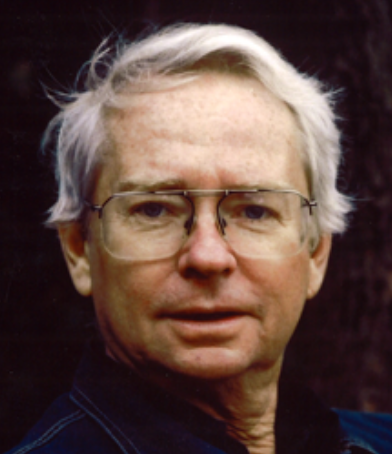
Very late in the game, albeit well more than a decade ago, I learned of Bruce Berger’s work when I happened upon Almost an Island: Travels in Baja California in a California bookshop.. >> READ THIS POST ON THE NEW PLATFORM AT WWW.MADAM-MAYO.COM
Monday, November 26, 2018
Q & A with Amy Hale Auker, Author of Ordinary Skin: Essays from Willow Springs
By C.M. Mayo www.cmmayo.com
This year, with some exceptions, the post for the fourth Monday of the month is dedicated to a Q & A with a fellow writer. This is the last Q & A for 2018; look for the series to resume on the fourth Monday in January 2019.
I had the pleasure of meeting Amy Hale Auker and of hearing her read from her work back in 2016 at the Women Writing the West conference in Santa Fe. She's the author of several works of poetry, fiction and essay, including Rightful Place, the 2012 WILLA winner for creative nonfiction and Foreword Reviews Book of the Year for essays. Her latest collection, Ordinary Skin: Essays from Willow Springs, is a treat for anyone who relishes fine creative nonfiction-- and it's a vivid and moving look at a life lived close to the land, on a working ranch in Arizona.
[>>CONTINUE READING THIS POST AT WWW.MADAM-MAYO.COM]
As those of you who follow my blog well know, my work to date has focused on Mexico, but for a while now I've been at work on a book about Far West Texas, and this had led me to read widely and closely about the West. It has a grand if sometimes underappreciated literary tradition, so if you're not familiar with it, take special note of Amy Hale Auker, and of her reading recommendations here. You will be richly rewarded.
From the catalog copy for Ordinary Skin:
Visit Amy Hale Auker's website www.amyhaleauker.com
C.M. MAYO: How might you describe the ideal reader for the essays in Ordinary Skin?
AMY HALE AUKER: Ordinary Skin is a book for anyone who loves language and story and first person narrative, who craves an intimate look at the natural world and the land, who recognizes the value of hard work and sweat with a pause, or many pauses, for falling in love with life, over and over again. While I think that women will find the deeper messages of the instinctual feminine, it is also a refresher course for men on why they love our Mother Earth.
C.M. MAYO: If a reader were to read only one essay in your collection, which would you recommend and why?
AMY HALE AUKER:"Using Tools Backward." That essay reflects our sense of place and those who came before, paving the way, and who we are as we stand in these places.
C. M. MAYO: You have been a longtime participant in cowboy poetry festivals, including the Cowboy Poetry Gathering in Alpine, Texas. My impression is that while cowboy poetry, fiction and song are beloved to many in the western US and Canada and elesewhere, they are also considered exotic, and alas, something to even disdain, by many in the literary communities in urban areas of the Pacific and Atlantic coasts. Your writing seems to me to fall squarely in both camps-- cowboy and what I would call (for lack of a better term) literary. Can you offer your thoughts about this? And perhaps comment on what people who read literary prose but who are unfamiliar with cowboy poetry (and cowboy culture generally) might look for and reconsider?
AMY HALE AUKER: I have to admit to having run with this question directly to my editor and dear friend, Andy Wilkinson, who is often a clearer thinker and better communicator about labels and definitions than I am. I tend to simply write what I write and bang my head against category later. Wilkinson responded to my query in this way:
I agree with Editor Dearest, but would also add that it is not my job to ask any reader to look more closely at any culture. It is my responsibility to simply do my job and step back (my clumsy paraphrase of Lao Tzu). This question looks too closely, in my opinion, at genre, marries me, as a writer/poet, too closely to a day job, a skill set, a means to earn a paycheck. Of course, my work in the natural world, with animals, growing food, informs my writing, my creative process, as did Frost's... as does Wendell Berry's. And yes, there are stereotypes out there, always, surrounding any profession or region that has been grossly, and often erroneously, romanticized to the point of becoming myth rather than reality. But an astute reader and listener will be quick to see where the stereotype breaks down and were reality shines through.
I would like to add that the elitist view of literature and life is what furthers the divide in this nation. That the only writing worthy of consideration can't come from the pen of someone who grows food, who works as a peasant, who has shit on their boots, who works with their hands. This us vs them view of art, literature, and philosophy is dangerous and furthers our separateness.
 C.M. MAYO: Speaking of shit, my own favorite writer on that topic is Gene Logsdon, who called himself "The Contrary Farmer," and who wrote a book I highly recommend-- it's informative, beautifully written, and hilarious-- with the title, Holy Shit.
For someone who appreciates good writing but is unfamiliar with writing about rural life / farming / ranching, apart from your works, what might be a few reading suggestions?
C.M. MAYO: Can you talk about which writers have been the most important influences for your writing-- and which ones you are reading now?
AMY HALE AUKER: My influences are eclectic and many... but I tribute the poetry and songwriting of Andy Wilkinson as an influence to write any and everything that burns brightly in me. I tribute Merrill Gilfillan, Jeanette Winterson, E. B. White, Verylyn Klinkenborg, Barbara Kingsolver, and Edward Abbey with influencing my first person narrative. Clarissa Pinkola Estes, Natalie Goldbberg, Ann Lamott, and Julia Cameron are on my "forever shelf." Recently I started reading Pema Chodron. I read a lot of fiction when I am writing nonfiction. So, right now I am reading novels. By my elbow is News of the World by Paulette Jiles. I love how she writes literary fiction in a western setting, breaking out of genre.
C.M. MAYO: You have been a consistently productive writer for many years. How has the digital revolution affected your writing? Specifically, has it become more challenging to stay focused with the siren calls of email, texting, blogs, online newspapers and magazines, social media, and such? If so, do you have some tips and tricks you might be able to share?
AMY HALE AUKER: I view my time as a pie chart. It is important to give of my creative energy consciously. However, my journey has also led me to consider all of the roles in my life as part of who I am as a creative being... author, cowboy, grandmother, gardner, cook, poet, performer, speaker. So, it has been fun to see how very creative I can be on my social media platforms, in particular Instagram. People point their cameras at things they love, so it is a glimpse at their hearts. That said, the most important thing I can do is to go to cow camp where I am unplugged and write in longhand on the unlined page. Or put a 38 pound pack on my back and walk off in the wilderness, solo except for the dog. And I do. When I am home, it takes discipline to turn it all off. But that is what we all should do, for more of the day rather than less.
C.M. MAYO: Another question apropos of the digital revolution. At what point, if any, were you working on paper? Was working on paper necessary for you, or problematic?
AMY HALE AUKER: I write three pages of longhand every single morning a la Julia Cameron. It is my discipline and my practice and it serves me well. Even if I don't get to write the rest of the day, I know I showed up at the page Even if it reads like a "to do" list, I know I was present to my creative fire. I wrote most of "The Story Is the Thing" in longhand on yellow legal pad because a character in the book wrote in the same manner. What startled me was the dramatic and interesting process of transfering my handwriting to the screen. There was a magic there that I have not forgotten and crave to duplicate. So I am grateful that there are so many tools available to us... from uniball pens on blank journal pages to speaking into our phones while we drive to Schrivener (which baffles me) to Word where I can hurry up and get it all down. There is a freedom in having multiple ways to approach art in any medium.
C. M. MAYO: Can you talk about how and why you joined Women Writing the West?
AMY HALE AUKER: I joined Women Writing the West because my publisher, Texas Tech University Press, told me to. It has been an honor to be part of that group of highly talented people.
[C.M.M. post-interview note: Women Writing the West is open to writers (both women and men) living in and/or writing about the West, in any genre. I've been a member for several years now, and highly recommend it.]
C. M. MAYO: What's next for you as a writer?
AMY HALE AUKER: So many things.... I am working on both a very weird collection of short short pieces that are a mixed bag of fiction and nonfiction and meditations as well as what may very well end up being a new collection of essays. However, I don't believe artists should discuss what they are working on at the time in much detail. It is too easy to talk about our process rather than dig deep and stay in it.... all the way to completion... if there is such a thing.
# # # # # # # #

This year, with some exceptions, the post for the fourth Monday of the month is dedicated to a Q & A with a fellow writer. This is the last Q & A for 2018; look for the series to resume on the fourth Monday in January 2019.
 |
| Amy Hale Auker |
[>>CONTINUE READING THIS POST AT WWW.MADAM-MAYO.COM]
As those of you who follow my blog well know, my work to date has focused on Mexico, but for a while now I've been at work on a book about Far West Texas, and this had led me to read widely and closely about the West. It has a grand if sometimes underappreciated literary tradition, so if you're not familiar with it, take special note of Amy Hale Auker, and of her reading recommendations here. You will be richly rewarded.
From the catalog copy for Ordinary Skin:
Touching on faith and body image and belonging, these essays explore our role in deciding what is favorable or unfavorable, as well as where we someday want to dwell, and who came before us. In that touching, they feel their way with observations about current affairs, drought, mystery, and the hard decisions that face us all as we continue to move toward more questions with fewer answers. This exploration is informed and softened by hummingbirds, Gila monsters, bats, foxes, bears, wildflowers, and hidden seep springs where life goes on whether we are there to see it or not. It is about work in a wild and wilderness environment. In the end, even as life changes drastically around us, we are better off for knowing that the ugly mud bug turns into a jewel-toned dragonfly.
Visit Amy Hale Auker's website www.amyhaleauker.com
 |
| ORDINARY SKIN: ESSAYS FROM WILLOW SPRINGS by Amy Hale Auker Texas Tech University Press, 2018 amazon bookdepository indiebound Seminary Coop |
AMY HALE AUKER: Ordinary Skin is a book for anyone who loves language and story and first person narrative, who craves an intimate look at the natural world and the land, who recognizes the value of hard work and sweat with a pause, or many pauses, for falling in love with life, over and over again. While I think that women will find the deeper messages of the instinctual feminine, it is also a refresher course for men on why they love our Mother Earth.
C.M. MAYO: If a reader were to read only one essay in your collection, which would you recommend and why?
AMY HALE AUKER:"Using Tools Backward." That essay reflects our sense of place and those who came before, paving the way, and who we are as we stand in these places.
C. M. MAYO: You have been a longtime participant in cowboy poetry festivals, including the Cowboy Poetry Gathering in Alpine, Texas. My impression is that while cowboy poetry, fiction and song are beloved to many in the western US and Canada and elesewhere, they are also considered exotic, and alas, something to even disdain, by many in the literary communities in urban areas of the Pacific and Atlantic coasts. Your writing seems to me to fall squarely in both camps-- cowboy and what I would call (for lack of a better term) literary. Can you offer your thoughts about this? And perhaps comment on what people who read literary prose but who are unfamiliar with cowboy poetry (and cowboy culture generally) might look for and reconsider?
AMY HALE AUKER: I have to admit to having run with this question directly to my editor and dear friend, Andy Wilkinson, who is often a clearer thinker and better communicator about labels and definitions than I am. I tend to simply write what I write and bang my head against category later. Wilkinson responded to my query in this way:
"The only way out is to question ... artificial categorization. Stevens didn’t write 'insurance executive' poetry, Williams didn’t write 'pediatrics' poetry, Frost didn’t write 'farmer' poetry, etc. Poets write poetry, and though their poems may be about a kind of life, the poets are neither the subjects nor the classifications."
I agree with Editor Dearest, but would also add that it is not my job to ask any reader to look more closely at any culture. It is my responsibility to simply do my job and step back (my clumsy paraphrase of Lao Tzu). This question looks too closely, in my opinion, at genre, marries me, as a writer/poet, too closely to a day job, a skill set, a means to earn a paycheck. Of course, my work in the natural world, with animals, growing food, informs my writing, my creative process, as did Frost's... as does Wendell Berry's. And yes, there are stereotypes out there, always, surrounding any profession or region that has been grossly, and often erroneously, romanticized to the point of becoming myth rather than reality. But an astute reader and listener will be quick to see where the stereotype breaks down and were reality shines through.
I would like to add that the elitist view of literature and life is what furthers the divide in this nation. That the only writing worthy of consideration can't come from the pen of someone who grows food, who works as a peasant, who has shit on their boots, who works with their hands. This us vs them view of art, literature, and philosophy is dangerous and furthers our separateness.

For someone who appreciates good writing but is unfamiliar with writing about rural life / farming / ranching, apart from your works, what might be a few reading suggestions?
AMY HALE AUKER: I just added Logsdon to my list of things to read! Thank you.
I hope you will consider all of Wendell Berry's work... poetry, prose, essay.... all of it. I highly recommend The Unsettling of America, essays surrounding the "green revolution" and the industrialization of agriculture.
Some other authors include James Galvin (Fencing the Sky), Verlyn Klinkenborg (The Rural Life), and Merrill Gilfillan (Magpie Rising).
McMurtry addresses this question you and I are tossing around in his excellent foreword to Still Wild: Short Fiction of the American West.
Teresa Jordan wrote a gorgeous memoir, "Ride the White Horse Home."
These are just a few, but if you really want to the peak of the pile, read The Unsettling of America. Berry is brilliant.
 |
| amazon bookdepository indiebound Seminary Coop |
Some other authors include James Galvin (Fencing the Sky), Verlyn Klinkenborg (The Rural Life), and Merrill Gilfillan (Magpie Rising).
McMurtry addresses this question you and I are tossing around in his excellent foreword to Still Wild: Short Fiction of the American West.
Teresa Jordan wrote a gorgeous memoir, "Ride the White Horse Home."
These are just a few, but if you really want to the peak of the pile, read The Unsettling of America. Berry is brilliant.
AMY HALE AUKER: My influences are eclectic and many... but I tribute the poetry and songwriting of Andy Wilkinson as an influence to write any and everything that burns brightly in me. I tribute Merrill Gilfillan, Jeanette Winterson, E. B. White, Verylyn Klinkenborg, Barbara Kingsolver, and Edward Abbey with influencing my first person narrative. Clarissa Pinkola Estes, Natalie Goldbberg, Ann Lamott, and Julia Cameron are on my "forever shelf." Recently I started reading Pema Chodron. I read a lot of fiction when I am writing nonfiction. So, right now I am reading novels. By my elbow is News of the World by Paulette Jiles. I love how she writes literary fiction in a western setting, breaking out of genre.
C.M. MAYO: You have been a consistently productive writer for many years. How has the digital revolution affected your writing? Specifically, has it become more challenging to stay focused with the siren calls of email, texting, blogs, online newspapers and magazines, social media, and such? If so, do you have some tips and tricks you might be able to share?
AMY HALE AUKER: I view my time as a pie chart. It is important to give of my creative energy consciously. However, my journey has also led me to consider all of the roles in my life as part of who I am as a creative being... author, cowboy, grandmother, gardner, cook, poet, performer, speaker. So, it has been fun to see how very creative I can be on my social media platforms, in particular Instagram. People point their cameras at things they love, so it is a glimpse at their hearts. That said, the most important thing I can do is to go to cow camp where I am unplugged and write in longhand on the unlined page. Or put a 38 pound pack on my back and walk off in the wilderness, solo except for the dog. And I do. When I am home, it takes discipline to turn it all off. But that is what we all should do, for more of the day rather than less.
C.M. MAYO: Another question apropos of the digital revolution. At what point, if any, were you working on paper? Was working on paper necessary for you, or problematic?
AMY HALE AUKER: I write three pages of longhand every single morning a la Julia Cameron. It is my discipline and my practice and it serves me well. Even if I don't get to write the rest of the day, I know I showed up at the page Even if it reads like a "to do" list, I know I was present to my creative fire. I wrote most of "The Story Is the Thing" in longhand on yellow legal pad because a character in the book wrote in the same manner. What startled me was the dramatic and interesting process of transfering my handwriting to the screen. There was a magic there that I have not forgotten and crave to duplicate. So I am grateful that there are so many tools available to us... from uniball pens on blank journal pages to speaking into our phones while we drive to Schrivener (which baffles me) to Word where I can hurry up and get it all down. There is a freedom in having multiple ways to approach art in any medium.
 |
| Women Writing the West |
C. M. MAYO: Can you talk about how and why you joined Women Writing the West?
AMY HALE AUKER: I joined Women Writing the West because my publisher, Texas Tech University Press, told me to. It has been an honor to be part of that group of highly talented people.
[C.M.M. post-interview note: Women Writing the West is open to writers (both women and men) living in and/or writing about the West, in any genre. I've been a member for several years now, and highly recommend it.]
C. M. MAYO: What's next for you as a writer?
AMY HALE AUKER: So many things.... I am working on both a very weird collection of short short pieces that are a mixed bag of fiction and nonfiction and meditations as well as what may very well end up being a new collection of essays. However, I don't believe artists should discuss what they are working on at the time in much detail. It is too easy to talk about our process rather than dig deep and stay in it.... all the way to completion... if there is such a thing.
# # # # # # # #
> Your comments are always welcome. Write to me here.
COMMENTS:
Ms. Mayo: Fascinating interview with Amy Hale Auker. I have two of her essay collections: Ordinary Skin and Rightful Place. Her word choices are poetic; her thoughts on ranch life are inspiring. Thank you for asking inciteful questions—they are challenging but she is up to the task. Judith Grout www.judithgrout.com
Thanks for your interview of Amy Hale Auker. I have read both her essays and her fiction and admire both, and heard her poetry at one of the WWW conferences (perhaps Tucson?). Your questions and her answers were thoughtful and interesting. I appreciated your delving into her thought processes and comments on poetry and essays. I loved both of your recommendations for books!
Julie Weston
Thursday, November 19, 2015
A Conversation with Sara Mansfield Taber, author of "Born Under an Assumed Name: The Memoir of a Cold War Spy's Daughter"

An age ago-- December 2011, to be exact-- I interviewed one of my favorite writers, literary journalist and poet Sara Mansfield Taber for my Conversations with Other Writers occasional podcast series. Well, it may have taken me almost four years, but today's the day the transcript finally went up onto my website.
 Read and/or listen in any time to the interview with Sara Mansfield Taber (and find show notes) >>here<<.
(In case you were wondering whether I was somehow blessed with 48 hours in the day, the answer is no, ho ho, I use CLK Transcription, which I found via Debra Eckerling's Write Online! newsletter and I do warmly recommend them. It was Jane Friedman-- another warm recommendation-- who urged me to start posting transcripts of my podcasts.)
You'll notice I've only posted one Conversation with Others Writer podcast this year-- an interview with Rose Mary Salum, the Houston, Texas-based Mexican poet, writer and visionary editor. Why not more? It's not for lack of enthusiasm on my part-- I relish talking with other writers-- but this year I've been putting my podcasting time into my "Marfa Mondays" Podcasting Project and the (related) book I'm writing about Far West Texas, World Waiting for a Dream: A Turn in Far West Texas.
That said, on a recent foray to San Antonio-- en route to visit the rock art of the Lower Pecos-- I did manage to record an interview for my "Conversations with Other Writers" series with Mary Margaret McAllen, a super crujiente one about her splendid book, Maximilian and Carlota: Europe's Last Empire in Mexico. Look for that podcast to be posted after the holidays.
I call my "Conversations with Other Writers" an "occasional series" because well, it's occasional, and it's occasional because podcasting on occasion beats not doing it at all!
By the way, if you're interested in learning to podcast, while I may not be the world's Podcasting Poobah with a PhD in Sound Engineering, I do turn 'em out of the oven in my writerly fashion, and I'll tell you how in my podcasting workshop for the San Miguel Writers Conference this February. (You can also pick up my ebook based on my one day workshop for the Writer's Center, Podcasting for Writers & Other Creative Entrepreneurs, over in the Kindle store.)
> Your comments are always welcome. Write to me here.

#1 Sara Mansfield Taber's Born Under an Assumed Name

Wednesday, October 14, 2015
Big Hike in the Big Bend: "Over Burro Mesa and into Apache Canyon" now in the Fall 2015 Issue of CENIZO JOURNAL

I am in deepest Mexico for the moment and so haven't yet put my paws on the new issue of the Far West Texas' always-lovely Cenizo Journal, but my on-the-spot informers tell me it is out and it does contain my essay, "Over Burro Mesa." Herewith:
OVER BURRO MESA
AND INTO
APACHE CANYON
By C.M. Mayo
I had ghosts on my mind—not in a spooky way, just stray thoughts about long-gone people on a bright, hot morning in the Big Bend National Park. In the foothills of the Chisos, I parked on the road-side. My aim was to hike over Burro Mesa west into Apache Canyon, to a corral where Apaches stashed stolen horses, and to explore an arrow quarry.
The week before in this canyon, two Italian women fended off a mountain lion. Apparently it was a young lion and their screams caused it to scramble off—but that wasn't the kind of adventure I was looking for. I figured my guide, Charlie Angell, could handle any critters better than I could.
Sun blasted down. The only clouds were wisps, as if from a paintbrush dipped in milk. Thorns snagged my jeans. The trail became so faint, I surely would have lost it on my own. Just when the hill dipped, then came another trudge up another rise through whips of ocotillo, lechugilla, biznaga, beargrass, stunted soap trees... Many had been incinerated, probably from lightning strikes.
No sign of burros on Burro Mesa. In two hours in this merciless landscape, we had seen no animal tracks, no scat; one lizard; one butterfly; two ravens.
It began to seem we were hiking not so much to a place but into the past, for this was a soundscape deeply strange to me. I live in Mexico City, one of the biggest in the world, where the thrum of traffic surges and fades, but never ceases. On myriad saint days, firecrackers pop like popcorn; weekends, the thump-a-thump-a of parties. Helicopters roar; dogs bark.
Less than two centuries ago, Burro Mesa and Apache Canyon, indeed, the whole of the Big Bend, were Mexican territory—Mexico City the capital. But notionally. Maps of the period tell the truer story, a blank space with a name that was a shrug of ignorance or, for those who had heard the stories of kidnappings and scalpings, a drum-beat of horror: LA APACHERIA.
Finally, not that there was anyplace to sit, we sat down.
"Drink up," Charlie insisted, handing me another bottle of water.
And this was when, suddenly as that mountain lion must have appeared, a lone figure carrying a pole taller than he was, loomed above us. A Texan in expensive-looking drab olive gear. He'd been hiking for several days, he said brightly—yesterday, the Mesa de Anguila. Mighty surprised to see us. We were the first hikers he'd encountered in the past three days.
And the pole?
For scaring mountain lions. But it didn't weigh much; it was bamboo. After twenty years, its bottom was starting to split-he lifted it to reveal a mass of duct tape. From his flask, he drank water, but he did not sit down. In a moment, he and his fabulous pole had disappeared down the hill.
We found the dry stone corral tucked against the mountain, blanketed in shade. It was filled with rubble and brush. Beyond a waist-high forest of creosote, the arrow quarry would have been easy to miss. It was not a hole in the ground, but a cliff of flaky-looking dark rock. Broken arrowheads lay all about: bone white, pink, orange, some tinged lavender. Before I put it back, I held one in my hand. Who knew how old it was, a hundred, five hundred years?
I tried to conjure an image of the hands that had chipped, so expertly, until this triangle, a form at once unfathomably ancient, life-giving, and deadly, emerged. It was probably a man, probably older than most in his tribe— let's say he had an arthritic knee. A claw strung onto his necklace.
# # #
> Listen in to "Over Burro Mesa" (plus "The Kickapoo Ambassadors") in Marfa Mondays #14
> Watch my mini-clip video of Apache Canyon:
> Big Bend National Park: This Video Could Save Your Life!
> Listen in to (or read the transcript of) my interview with founding editor of Cenizo Journal, Dallas Baxter: "This Precious Place."
> Listen in to (or read the transcript of) my interview with the immensely talented and daredevil photographer Paul V. Chaplo, author of Marfa Flights, "On Finding Composition in the Landscape"
> Listen in to the whole enchilada! Nineteen podcasts so far.

Wednesday, April 25, 2012
Guest-blogger Ellen Cassedy on 5 Links to Learn Yiddish

Ellen Cassedy is the author of We Are Here: Memories of the Lithuanian Holocaust (University of Nebraska Press, March 2012)
Ellen Cassedy set off into the Jewish heartland of Lithuania to study Yiddish, the language of European Jews, and connect with her forebears. Once there, however, old certainties began to dissolve, what had begun as a personal quest expanded into an exploration of how Jews and non-Jews in a land scarred by conflict are confronting their Nazi and Soviet past in order to move forward into the future.
Probing the terrain of memory, massacre, and moral dilemmas, Ellen asks: Can we honor our diverse heritages without perpetuating the fears and hatreds of the past? Her account shines a spotlight on fragile efforts toward tolerance, and finds reason for hope.
Learn Yiddish: 5 Links
When my mother was alive, I could count on her to keep hold of the old Jewish world. But when she died, all those who’d come before seemed to be slipping away. My mother had sprinkled Yiddish words into conversation only occasionally, like a spice, but once she was gone, I found myself missing them. I developed a craving to connect myself to my origins by learning the old mother tongue. Learning to speak Yiddish – and to understand, read, write, sing, and translate – has been a mekhaye, a great pleasure.

Even a taste of Yiddish feels delicious on the tongue. Here are some links to get you started:
Yiddish Twitter
Who knew? Twitter can help you find the Yiddish class or program that meets your needs.
http://www.yiddishfarm.org/
You can even choose to learn the language while working on a farm.
Yiddish Primer
http://www.yiddishculture.org/basiclesson/index.html
An easy place to begin (without farm work) is the 20 simple online lessons offered by the Dora Teitelboim Center for Yiddish Culture. Start with the alphabet; sound is included to help you pronounce.
Yiddish Online Dictionary
It goes both ways, from kiss to kush and vice versa.
Yiddish Book Center
Check out the Yiddish Book Center to connect to a wealth of information about all things Yiddish.
Enjoy!
http://www.ellencassedy.com/
---> For the archive of Madam Mayo guest-blog posts, click here.
Recent guest-bloggers include novelist Peter Behrens, translator Harry Morales, and New World heirlooms expert Steve Sando.
---> For the archive of Madam Mayo guest-blog posts, click here.
Recent guest-bloggers include novelist Peter Behrens, translator Harry Morales, and New World heirlooms expert Steve Sando.
Wednesday, February 24, 2010
C.M. Mayo's Dialogue Intensive at the Writer's Center on March 7, 2010
 One day only Dialogue Intensive workshop for both fiction and creative nonfiction (personal memoir, travel memoir, etc) writers, both beginning and advanced, this March 7th, 10 am - 5 pm (with a one hour break for lunch) at the Writer's Center in Bethesda MD (next to Washington DC).
One of the most powerfully vivid ways to show character, relationship, conflict and/or mood is through the use of dialogue. For both beginning and advanced fiction and nonfiction writers, this workshop focuses on the use and misuse of dialogue, with a series of mini-lectures interspersed with brief exercises. The goal is that by the end of the workshop, the dialogue in your writing will be of notably higher quality.
For more information and to register on-line, click here.
For more about my books, visit www.cmmayo.com
More anon--- including a guest-blog post.
Tuesday, February 19, 2008
San Miguel Writers' Conference This Weekend
 I'll be leading the "Creative Nonfiction" session on Saturday morning. For the complete line-up, schedule and link to register, click here.
Wednesday, December 12, 2007
San Miguel Writers Conference Coming Up
 The annual San Miguel Writers Conference in San Miguel de Allende, Mexico, is coming up this February. I'll be leading the break-out session on creative nonfiction on February 23rd. Some of the other faculty include Beverly Donofrio, Tony Cohan, and Wayne Greenhaw. Looks like it will be bien divertido. More anon.
Wednesday, August 08, 2007
Brevity
 Check out the excellent summer issue of Brevity, the on-line creative nonfiction journal edited by Dinty W. Moore. (This issue doesn't contain anything of mine, but some time ago, Brevity ran an excerpt from Miraculous Air.) I think the form-- 750 words or less-- is perfect for on-line reading. (How I hate to have to scroll down.) More anon.
Subscribe to:
Posts (Atom)